
AI Bubble vs. Dot-Com Bubble: What's Different This Time?

🔗 Previous post


Hello, this is Rabbit Prince.
We’re currently experiencing extreme market volatility.
Is your stock portfolio truly safe right now?
Making money in a bull market is relatively easy.
Avoiding losses in a bear market isn’t particularly difficult either.
The real problem is a market that swings violently up and down every single day.
In this environment, investing becomes genuinely challenging.
It’s like swimming.
You hold your breath underwater and breathe above the surface.
If you reverse that—holding your breath above water and trying to breathe underwater—
it leads to serious trouble.
In volatile markets, survival depends not on emotion,
but on having clear personal criteria and an objective view of the market.
That’s why today I want to discuss
why the market is swinging so violently
and what lies at the core of this volatility.

Why Is the Market So Unstable Right Now?
What do you think is causing the relentless turbulence in the U.S. stock market
(and by extension, the Korean market that’s heavily influenced by it)?
Is it because the next Fed Chair candidate is seen as hawkish?
Is it because the Trump administration is pushing aggressive tariff policies?
These factors certainly matter.
But in my view, the most critical factor is diverging perceptions about AI—
the industry currently driving the market.
In other words,
the debate over whether AI is a bubble—
the so-called AI bubble narrative—
has become the dominant explanation for today’s volatility.
Why Does the AI Bubble Narrative Keep Resurfacing?
Let’s start with a basic question.
Why does the AI bubble argument keep coming back?
The most commonly cited reasons include:
Excessive capital expenditures (CAPEX) by AI companies
Chain reactions of reinvestment in data centers, GPUs, and infrastructure
Rising debt levels in the process
Long-term profitability that remains unproven
Looking at these factors alone,
it’s not unreasonable for people to ask,
“Isn’t this starting to look like the dot-com bubble?”
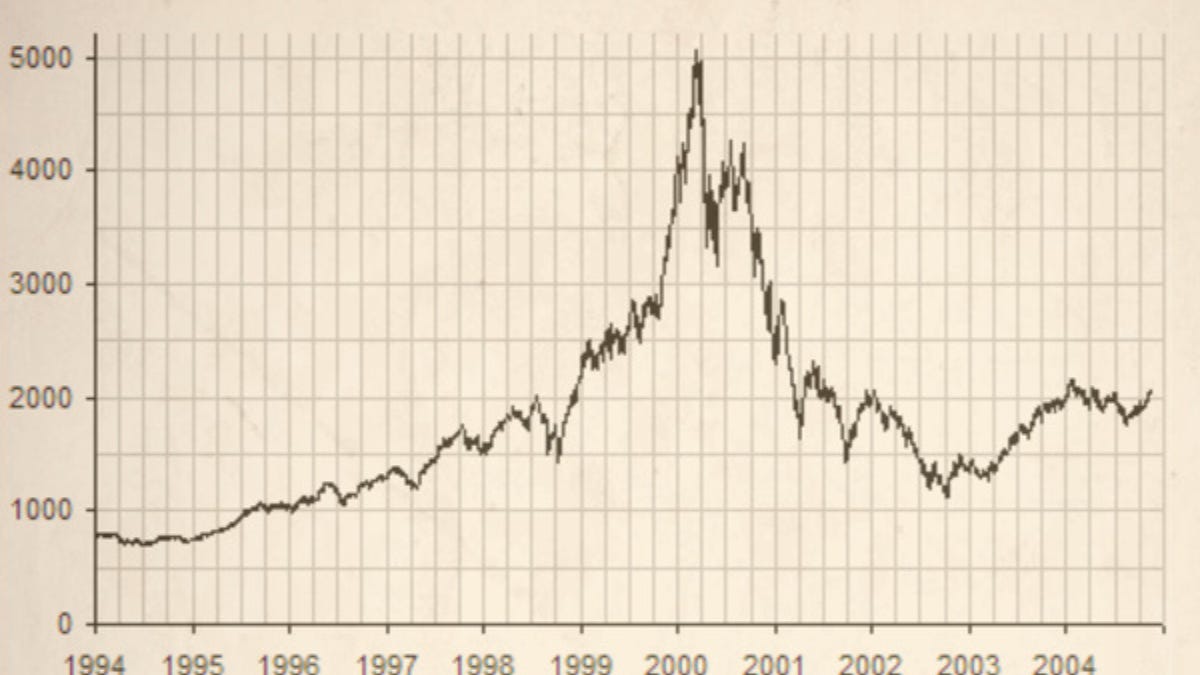
So Is This Really a “Bubble”?
What matters here is how we define “bubble.”
During the dot-com era,
the technological direction was correct,
but there were virtually no real revenue models.
User growth, revenue, and profits were completely disconnected,
and valuations exploded purely on expectations.
AI today is fundamentally different.
AI is already:
Tangibly improving corporate productivity
Generating real revenue
And in some cases, producing actual profits
In other words,
this isn’t a bubble without substance.
The issue is that excessive expectations and valuations
have been layered on top of that substance all at once.
So I don’t see AI as a “pure bubble,”
but rather as real fundamentals overlaid with high valuations.

Does That Mean a Dot-Com-Style Collapse Is Coming?
This is the most important question.
My conclusion:
a market-wide collapse like the dot-com bust is unlikely.
Here’s why:
Companies that can genuinely sustain AI infrastructure clearly exist
Market leaders already generate massive cash flows
The technology isn’t just “potential”—it’s already in active use
That said, some AI-related companies may face corrections
due to excessive investment and weak profitability.
But the likelihood of this triggering a systemic market collapse
like we saw in the early 2000s
remains limited, in my assessment.
So What Should We Do Now?
One thing is certain.
Even if AI isn’t a bubble,
there will inevitably be periods when AI takes a breather.
The current directionless swings in the market
reflect a tug-of-war between bulls and bears.
In this environment,
a more conservative approach is needed
rather than aggressive investing.
Reduce overall buying intensity
If your portfolio is heavily concentrated in Big Tech or AI,
increase exposure to traditional manufacturing or consumer companiesIf certain positions have already delivered strong gains,
actively consider taking profits

A Word of Caution About Rate Cuts
Markets currently expect roughly two rate cuts this year.
In my view,
the shift toward defensive investing should happen
no later than right after the first rate cut.
The reason is simple.
Once the second rate cut is implemented,
rate cuts themselves no longer support the market.
Rate cuts that have already been telegraphed
are mostly priced in,
and afterward,
with that monetary policy cushion removed,
the market gets re-evaluated
based on corporate earnings and valuations.
So if two rate cuts are expected,
it makes sense to shift your portfolio
into a defensive structure
while there’s still one policy tailwind remaining.
This becomes even more important
after the U.S. midterm elections,
when policy and sentiment tailwinds for equities
are likely to diminish further.
That Doesn’t Mean Staying Defensive Forever
What matters isn’t “how long”
but “until when.”
A conservative strategy only needs to be maintained
until certain conditions are confirmed:
How well AI companies withstand the downturn
Whether earnings and structural growth remain intact after corrections
Once these signals start appearing
and it becomes clear the market is nearing the end of its volatile phase,
that’s when you can reposition.
Final Thoughts
Today’s market is undeniably challenging,
and for stock investors, it may feel like a crisis.
But if we:
Reduce exposure when AI peak or bubble narratives dominate
Rebuild portfolios around defensive positions
And gradually re-enter AI stocks after they’ve corrected sufficiently
We’re not just surviving—
we’re investing far more efficiently than most.
Volatility is a risk,
but for prepared investors,
it’s unmistakably an opportunity.